THE RUBY JOURNAL · HERITAGE JEWELLERY
Kundan and Polki: What the Words Mean
Kundan and polki are spoken of almost interchangeably at some counters, though the words describe different things—one a technique, the other a stone. Jadau adds a third term, describing the broader setting tradition both often belong to. Knowing what each word means makes it possible to ask a clearer question about any specific piece.Prepared and reviewed by the Ruby Jewellers house team in Lahore · Updated 3 September 2026Kundan: a technique, not a stone
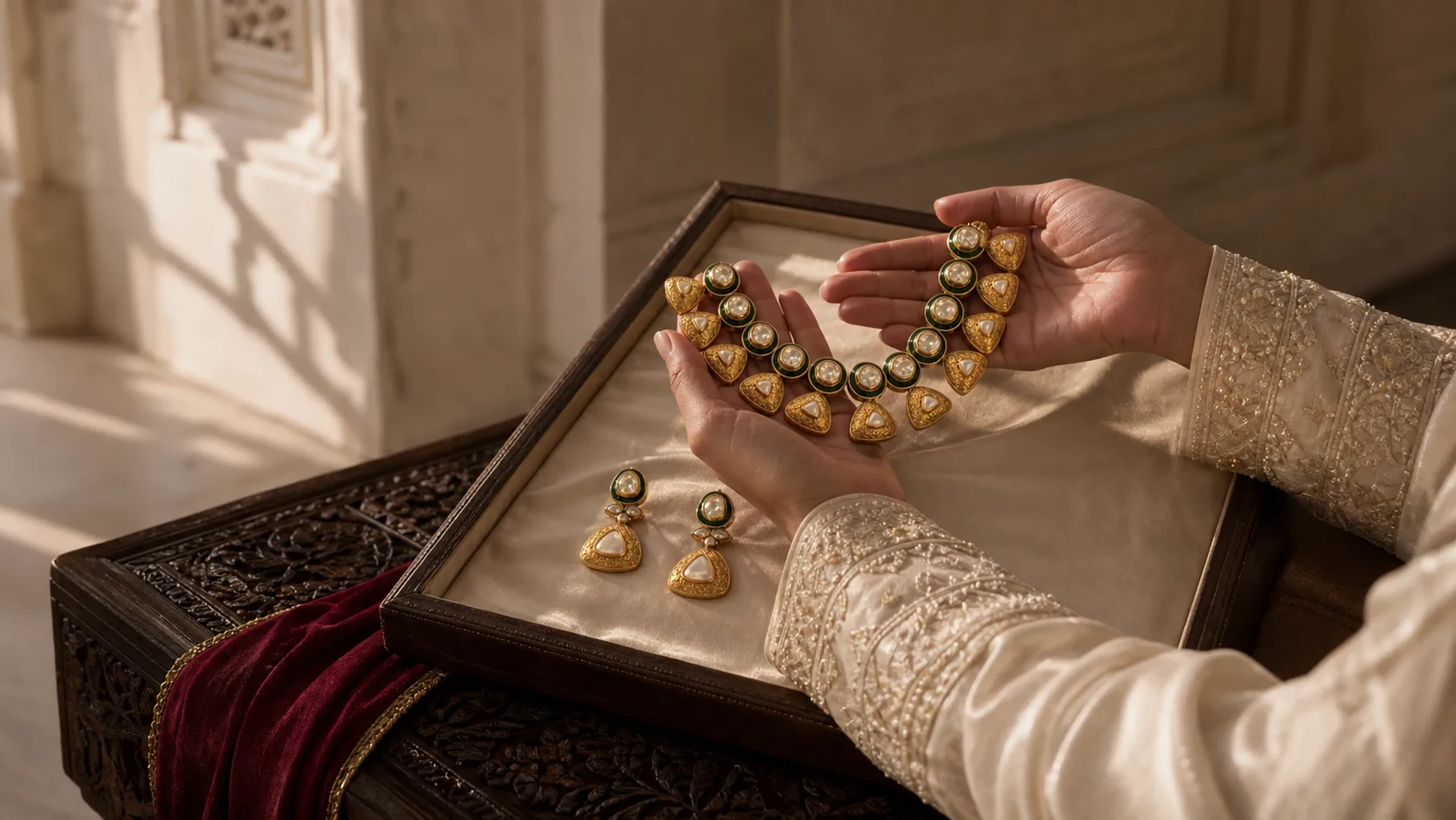
In traditional work, kundan describes a setting method rather than a gemstone. A stone sits on a core of lac, a natural resin, then is framed with kundan itself—finely refined gold foil—pressed with small tools into every gap until it holds firm without prongs or claws. Historically, the technique set glass and coloured gemstones as readily as diamonds; the gold is what gives the setting its name.
Polki: the diamond, before faceting
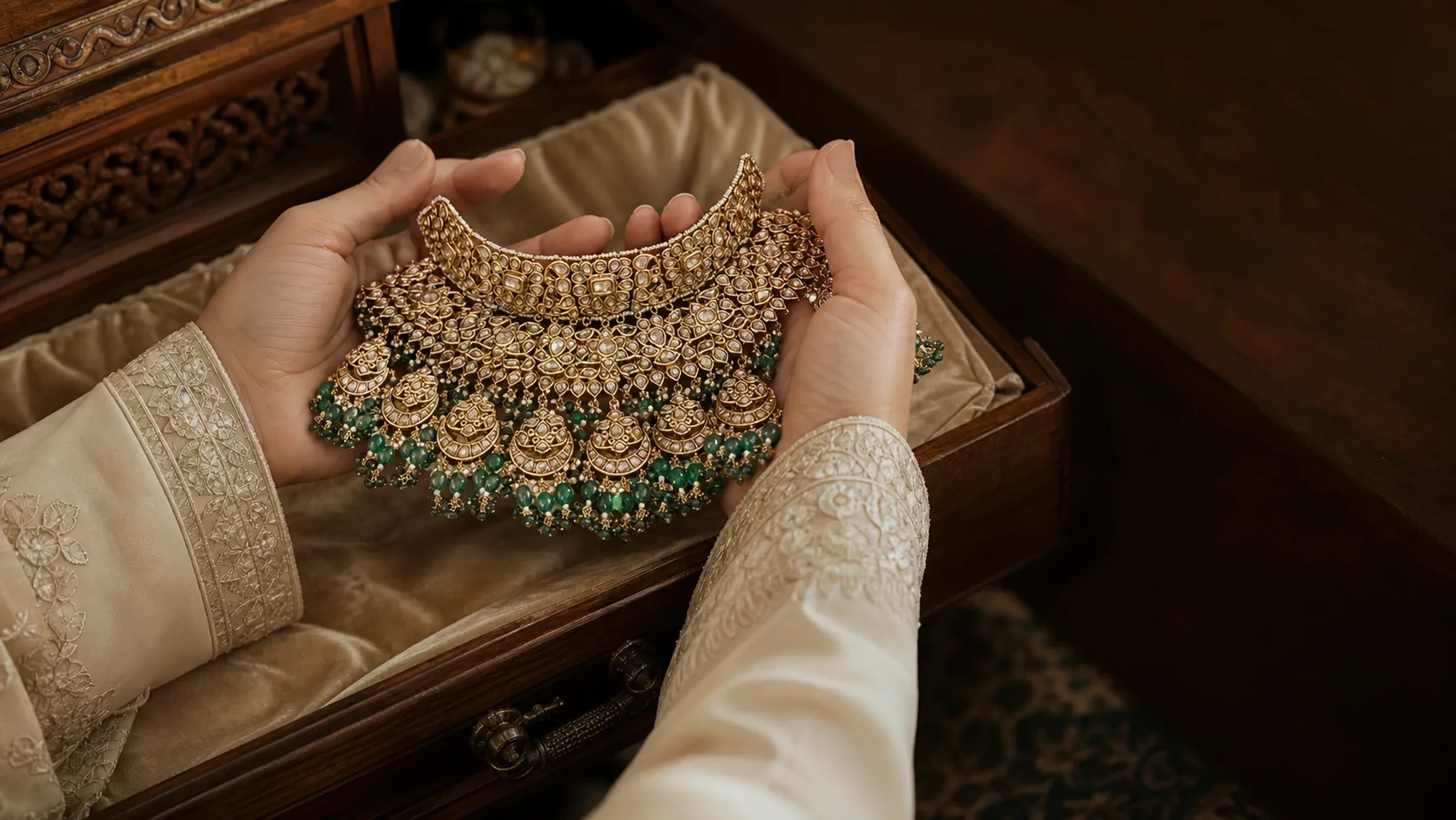
Polki refers to diamonds cut lightly, or not at all, rather than shaped into the faceted forms familiar from modern brilliant cuts. The character that results—a softer, more historic light—is what makes polki so closely associated with heritage jewellery. How to judge a polki piece once it is set, and how it wears over a full ceremony, is covered in the guide to polki jewellery.
Jadau: the tradition both belong to
Jadau is the broader inlay tradition—the practice of embedding stones into gold—that both kundan and polki settings usually belong to. Kundan is, in effect, one way of doing jadau work; a polki stone is also typically set using the same embedding method. Jadau, in short, is the umbrella term, with kundan and polki naming what is actually being set within it.
Why the words blur at the counter
In everyday use, kundan is sometimes used loosely to describe an entire look—a particular kind of gold setting and finish—rather than the specific technique that gives the word its meaning. Polki and jadau drift in similar ways. None of this is dishonest so much as imprecise, but it means the words alone are not a reliable description of what a piece is actually made of.
Turn the piece over
The reverse of a kundan piece often carries its own story. In traditional work, the back was finished with meenakari—coloured enamel—so the jewel was beautiful from both sides, the enamel originally meant for the wearer's own view rather than anyone facing her. A reverse left plain usually points to a simpler piece; ask what technique, if any, was used to finish it.
Ask, and look after it accordingly
Rather than trusting a label alone, ask a jeweller to describe what a specific piece actually contains: which stones, which setting method, and whether any enamel sits on the reverse. Care follows from the answer. A lac-cored kundan setting generally asks for gentler handling than a piece set conventionally, and any coloured enamel deserves the same protection from moisture and harsh cleaning as a delicate stone would.
Questions, answered
Is kundan a type of stone or a setting technique?+
A setting technique. Kundan describes refined gold foil pressed around a stone on a lac core—the stone itself may be a diamond, a coloured gemstone, or historically even glass.
What is the difference between jadau and kundan?+
Jadau is the broader inlay tradition; kundan is one way of practising it, using refined gold foil rather than any other setting method. A piece can fairly be described as both.
Why does the reverse of a kundan or polki piece matter?+
It often reveals the setting method, the finishing and, on traditional pieces, enamel work such as meenakari that was never meant to be hidden—only reserved for the wearer's own view.